Today at 10AM, for 17 minutes, tens of thousands of schoolkids across the country will participate in the National School Walkout, a peaceful protest to honor the 17 lives lost in Parkland, Florida on February 14. A lot of parents are asking whether a child can get in trouble if they participate in the walkout and the short answer is: no. At least not in any major way.
However there's more to it than that, and it's good to have information at hand, should you want to inform your kids, protect them, or just guide them in making good choices on their own.
Your kids may also considering participating in the all-day walkout on April 20 on the anniversary of the Columbine school shooting, and we hope you find information valuable for that event as well.
Related: 5 terrific children’s books about activism to help raise kids who want to get involved
Here are some things you should know first.
*The 1969 Tinker v Des Moines School District Supreme Court decision made it clear that kids in school do not "shed their constitutional rights to freedom of speech or expression at the schoolhouse gate." *The School Superintendents Association issued a strong statement that "AASA is proud to support the National Day of Action to Stop Gun Violence in Our Schools. Through this day of action, we urge teachers, families, students, administrators and every member of the community to engage in acts of advocacy and civic engagement in and around their schools. Create actions that work best in your school and community." They provide guidance to schools in this article filled with links and resources; however they do leave decisions up to individual districts.
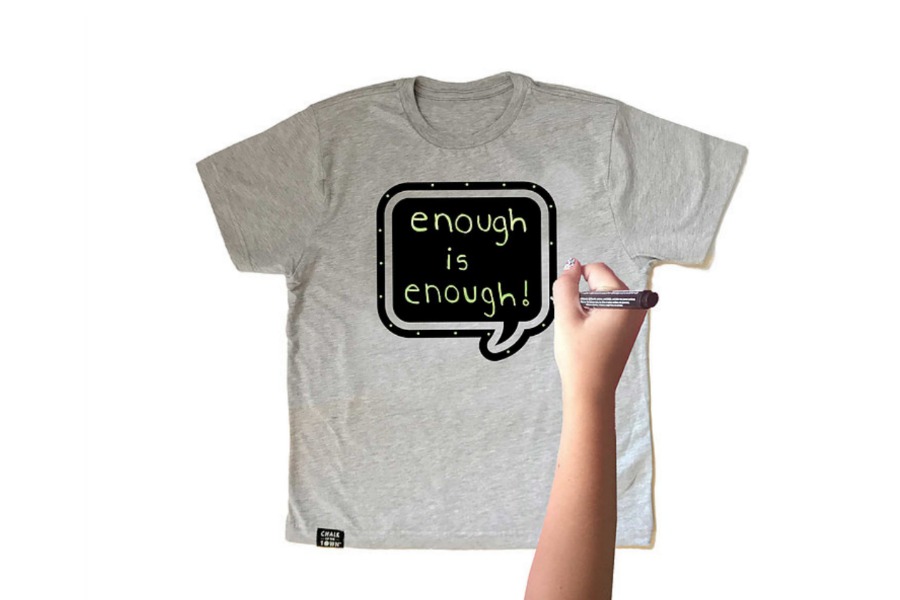
Chalkboard tees from Chalk of the Town: WIth a discount for our readers!
*If you want to know your own school district's policy about the School Walkout, visit the website for your local Board of Education. For example, Carmen Farina, New York City's Chancellor of Schools, supports students participation in civic engagement and exercising of their First Amendment rights, but issues good advice for all parents and kids to read, about safety, responsibility, and how families should discuss the issue together. *CNN has a very clear article that takes on topics like why your school can't punish you for participating in a school walkout, with advice from the ACLU's Ben Wizner, and attorney Christine V. Hamiel. *Teachers do not have the same rights to participate in a walkout. Vox has helpful details about this. *The ACLU has additional information about students' rights to protest peacefully, making it clear that while "schools can typically discipline students for missing class...what the school can’t do is discipline students more harshly because they are walking out to express a political view, or because school administrators don’t support the views behind the protest." *That said, there are some schools that have threatened students with punishments including a detention for an unexcused absence. Most notably: The Houston-area Need Needville District, which threatened students with a hefty three-day suspension as penalty. (Three civil rights groups are on the case, and I wouldn't be surprised if such an unduly harsh punishment is found unconstitutional for the above reasons.) *One way around potential school punishments, suggested by the ACLU in this Slate article: "parents are within their rights to sign students out of class for 17 minutes or for the entire day." *As for whether colleges can punish students for having participated, The Princeton Review shared this page from the National Association for College Admission Counseling, with the most updated list of college statements regarding disciplinary action for applicants who have participated in civil protests. TLDR; dozens of universities have explicitly supported students' rights to peacefully protest with no penalty but check your own application list.Dartmouth supports active citizenship and applauds students’ expression of their beliefs. pic.twitter.com/TlcKcQIxQ1
— Dartmouth (@dartmouth) February 23, 2018
Participation in peaceful protest in no way jeopardizes an admission decision at Texas State University.
— TxState Admissions (@TXSTAdmissions) February 27, 2018
UCLA supports students who use their right to peacefully demonstrate and have their voices heard. We stand with you. pic.twitter.com/n4JJgRoEK8
— UCLA Admission (@UCLAAdmission) February 24, 2018