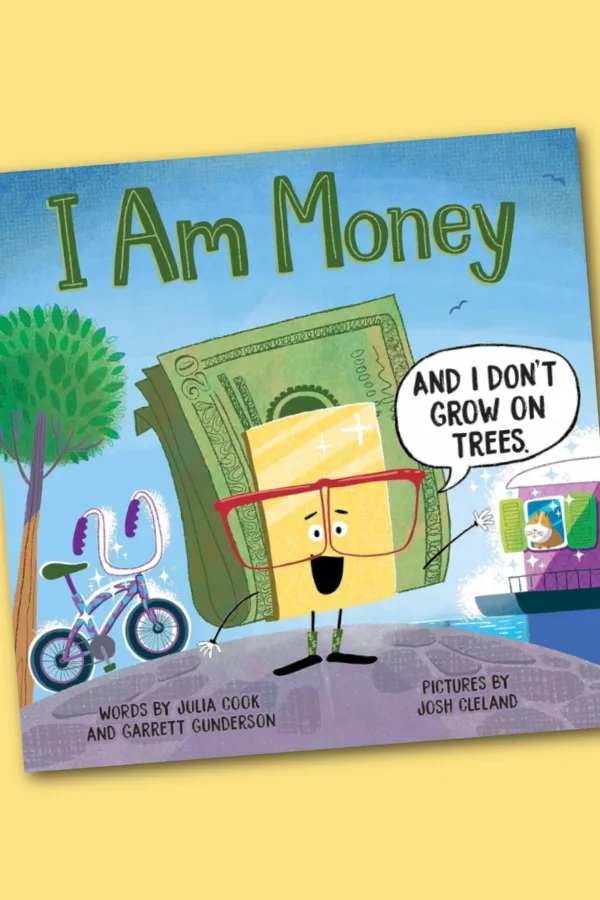
 I Am Money, by Julia Cook, Garrett Gunderson. Illustrated by Josh Cleland
© 2024 Sourcebooks
We're happy to bring you this guide on behalf of our partner Sourcebooks, publishers of the wonderful new picture book I Am Money, by award-winning children's author Julia Cook and best-selling author and financial coach Garrett Gunderson, with charming illustrations by Josh Cleland.
It's like a Schoolhouse Rock-style book, and we're so excited about it because it's the kind of subject that's hard to find in children's books. In fact, we're hoping I Am Money becomes an essential title in parents' and teachers' own libraries of educational books for kids. Because being smart about money from an early age is a very important thing.
I Am Money, by Julia Cook, Garrett Gunderson. Illustrated by Josh Cleland
© 2024 Sourcebooks
We're happy to bring you this guide on behalf of our partner Sourcebooks, publishers of the wonderful new picture book I Am Money, by award-winning children's author Julia Cook and best-selling author and financial coach Garrett Gunderson, with charming illustrations by Josh Cleland.
It's like a Schoolhouse Rock-style book, and we're so excited about it because it's the kind of subject that's hard to find in children's books. In fact, we're hoping I Am Money becomes an essential title in parents' and teachers' own libraries of educational books for kids. Because being smart about money from an early age is a very important thing.
Some purchases in this guide may help support our team at no additional cost to you. All of our recommendations are independently selected by our editorial team. And we really really love the book!
Teaching Toddlers About Money: What You Can Do
It's true, you can start teaching financial literacy before your kid can tie their own shoes. And it can be a lot simpler too. • Teach your toddler how to drop coins into a piggy bank, while you identify the name of each bill or coin and its value. (Yes, it's confusing that the nickel is bigger, but worth less than the dime.) Bills are also a good way to work on identifying numbers. By the way, a clear piggy bank like the cute, personalized one below, or even a clear jar, is best to help kids literally see how their money "grows" -- or how it disappears. Personalized piggy bank from 2BWoodKIds on Etsy
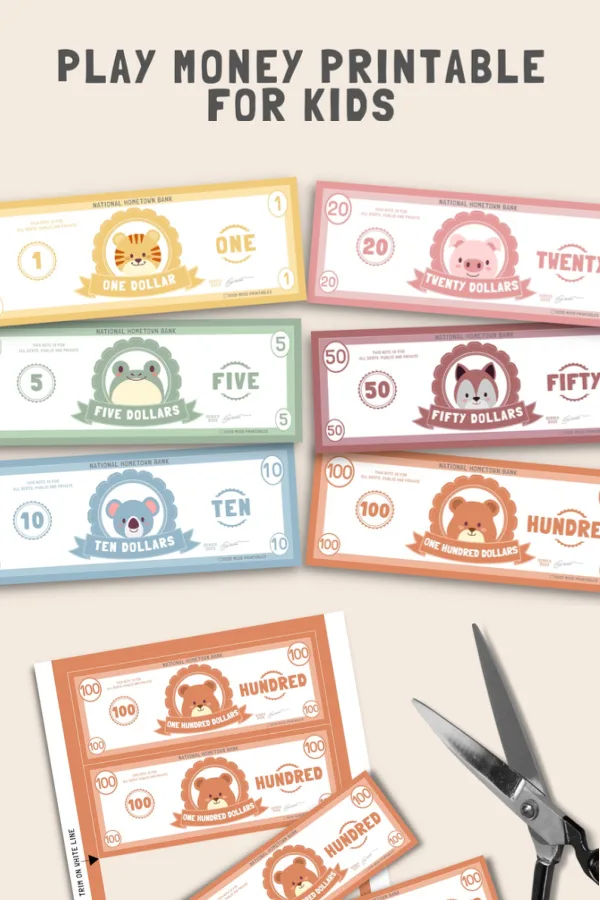
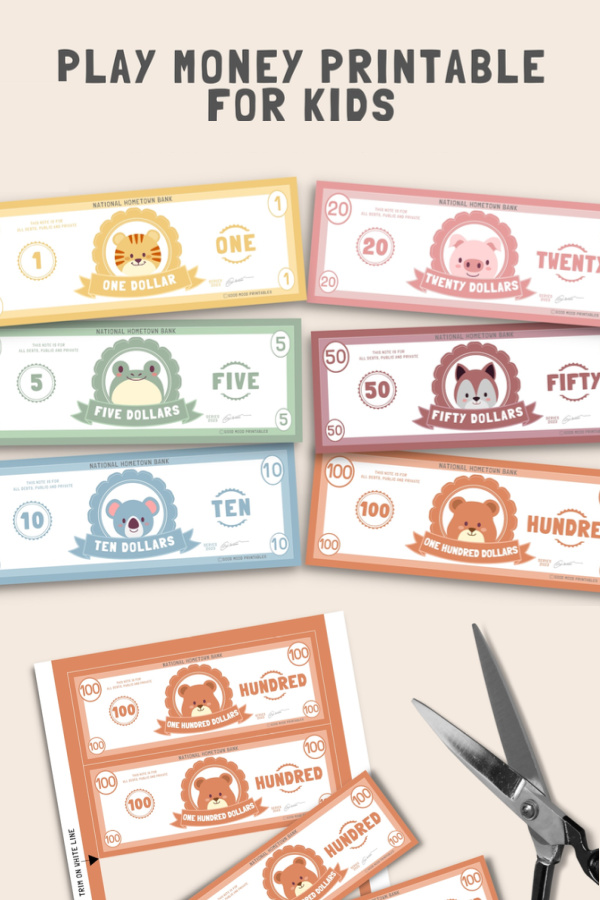 Play Money Printable for Kids: an instant download from Good Mood Printables on Etsy
Teaching Preschoolers and Kindergarteners About Money: What You Can Do
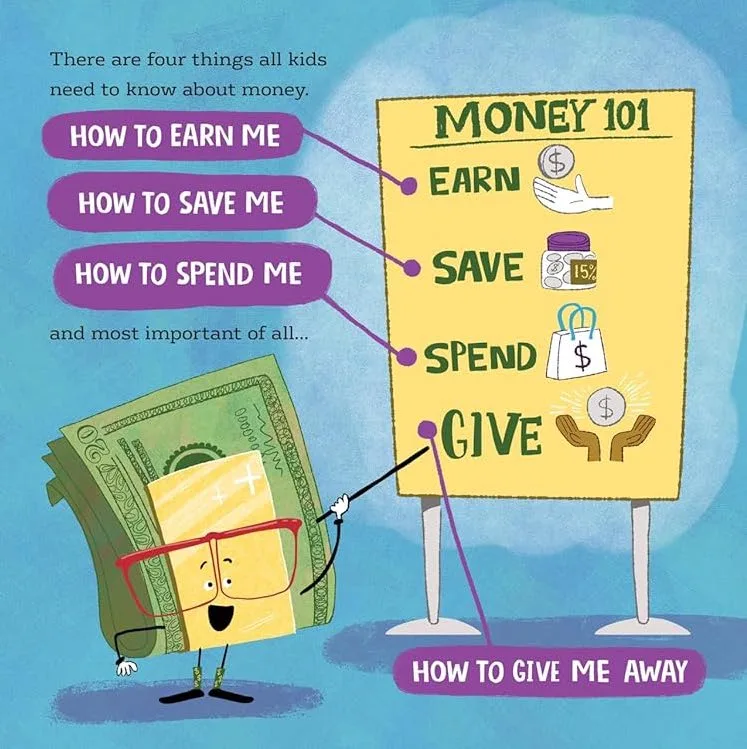
Teaching four and five-year-olds about money is actually really exciting. They're old enough that you don't have to worry about them eating the coins they save, and they take an interest in the idea of saving and giving. Young kids are naturally charitable, and it's a joy to see that in your own kid. • Talk about budgeting in terms of your family's financial values. Young kids won't be able to understand your complete household budget, but you can explain that you spend money each month on your home, food, and clothing, but that you have to save money to pay for their birthday gifts and put aside money to donate to that animal shelter in the neighborhood. Basically, an intro to the premise of save/spend/share. • Let them put spend/save/share to work with a small allowance. Kids are developmentally capable of understanding delayed gratification around four years old. Give them a little money each week, and have conversations about spending a little on small things versus saving for something bigger later on, and setting aside money to help support the people and causes we care about. A save-spend-share bank for kids with three separate compartments (or make one yourself using 3 mason jars) will help them start making their own decisions about how to divvy up their birthday money or allowance.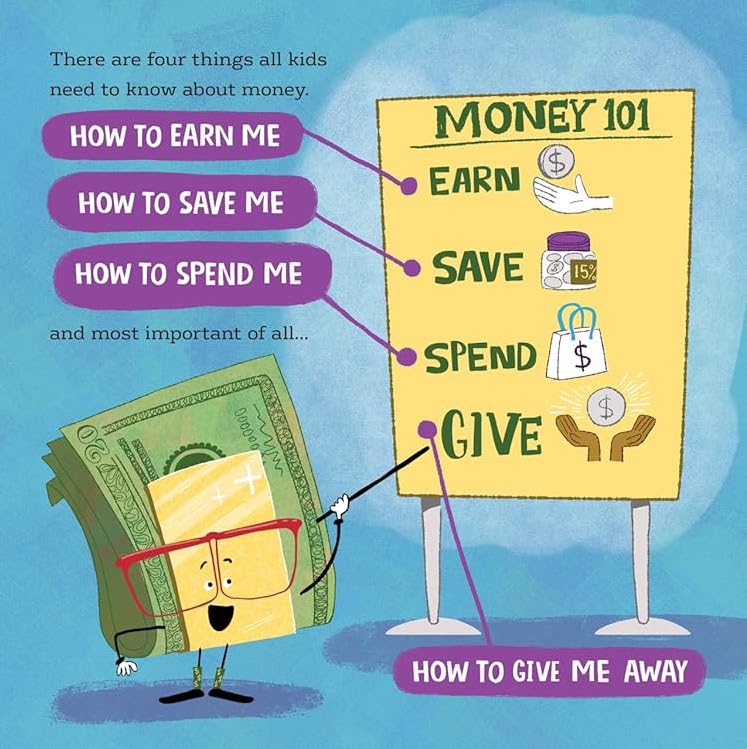 I Am Money does a great job of teaching kids about earning, saving, spending, and giving
Teaching Kids 5-8 About Money: What You Can Do
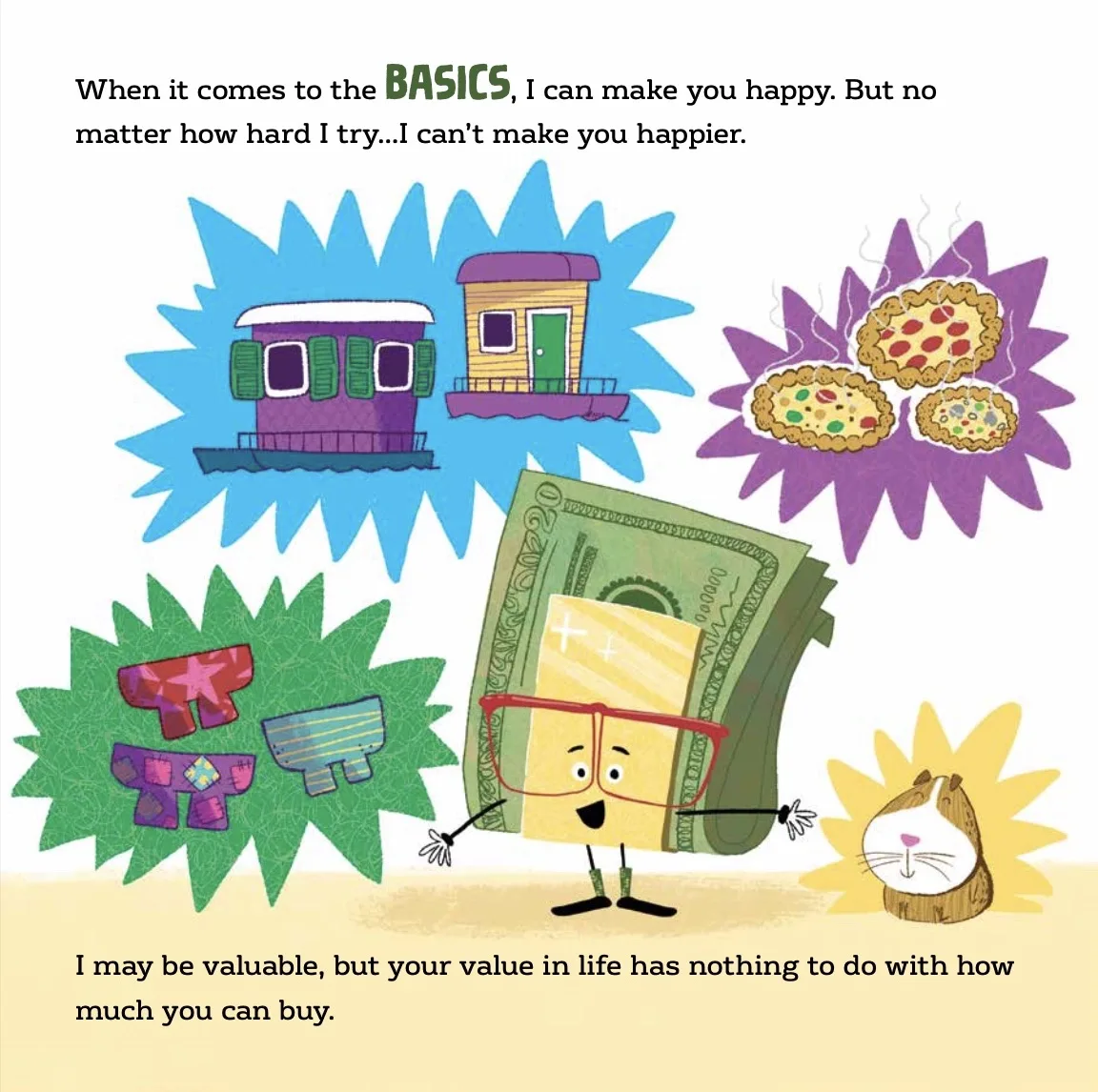
Those of you old enough to remember the pre-online banking days may remember learning how to write checks in second or third grade. Kids are remarkably capable of understanding more complex financial literacy topics when they hit grade school -- and they will, with parents' help. • Increase their allowance incrementally. This is a fantastic way to demonstrate that having more money each week doesn't necessarily mean needing to spend more money each week. It's also an important opportunity to remind them that their value is not connected to how much they have or how much they earn. Your child is no more valuable when they earn $5 a week than when they were earning a quarter each week.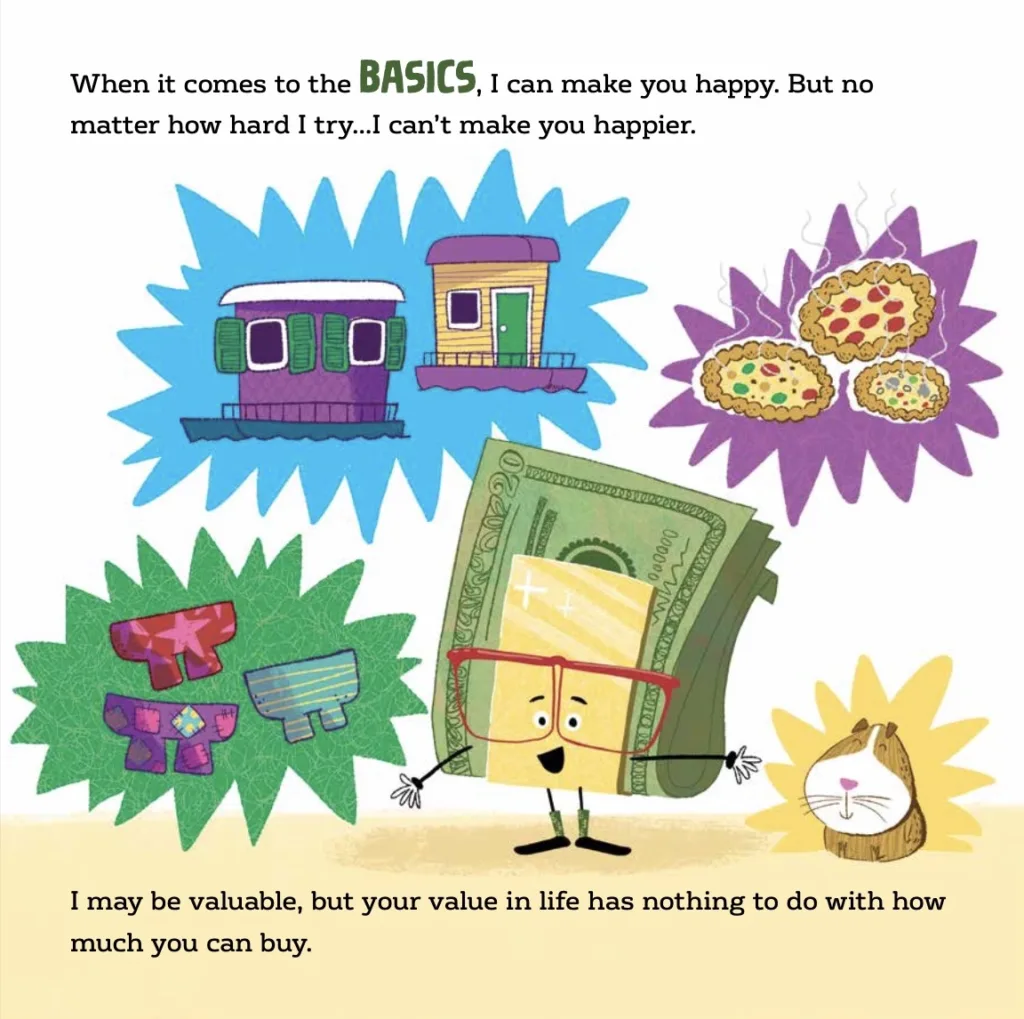 I Am Money does a great job of reminding kids this important lesson.
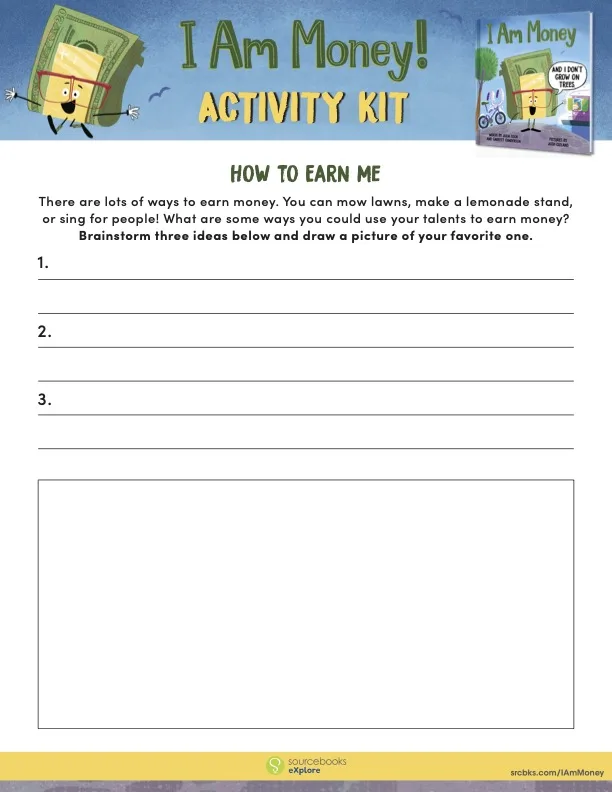
Download the free I Am Money activity kit for some great exercises for kids to help get them excited to learn about money.
• Start talking about the different forms of money. Kids can now understand credit cards, charge cards, debit cards and the pros and cons of each. They can even start learning the basics of cryptocurrency. I Am Money handles this in a really simple way. (After all, it was co-written by an actual wealth coach and all-around financial guru.) If they want to learn more, do the research together -- you'll find a great, educational intro to crypto on the Coinbase site that's very helpful. • Describe the basics of investing. Maybe you buy a stock together and follow it each day. Maybe you pretend to buy a stock together and follow it each day. Or look at the various rates of savings products like CDs and Money Market funds and compare them. If a 6 or 7-year-old can understand baseball player stats and keep track of Girl Scout Cookie sales, they can easily start to learn how money grows through investments.Teaching Tweens About Money: What You Can Do
At this point, your kids are probably off on their own a lot more, starting to make independent choices about spending (and hopefully saving and sharing). Which means this is the time to teach tweens about money in more detail and with a little more complexity. • Differentiate between "price" and "value" Without getting into a full lesson in supply and demand (though you can do that too), it's easy to talk about why a particular car, a brand of shoes, or even bread at the farmers market costs more than others that may seem the same -- and why sometimes it may be better to spend a little extra for something that's made better or lasts longer. Photo: Rafael AS Martins on Unsplash